EconoScope | Hoshine case puts U.S. forced-labor enforcement to the test_我的网站
A |
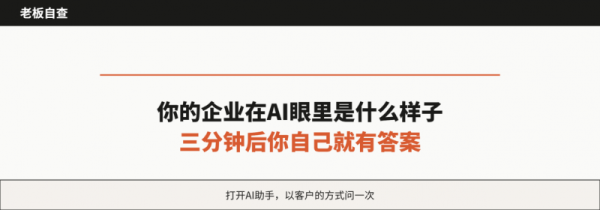
一键部署OpenClaw 这篇文章教你一个动作,三分钟做完,不需要任何专业知识。
B | 动作的名字叫老板自查:打开你手机里的任意一个AI助手,像客户一样开口提问,看看AI给出的答案里,你的企业是什么形象。 为什么值得学这个动作?因为客户认识企业的第一入口,已经从搜索引擎换成了AI问答。 (ECNS) -- U.S. restrictions on Chinese companies over alleged “forced labor” are facing growing scrutiny, both over the facts behind such accusations and the legal procedures used to enforce them. Recently, U.S. Customs and Border Protection (CBP), under the Department of Homeland Security, updated its records to remove Hoshine Silicon (Jia Xing) Co., Ltd., a Chinese photovoltaic supply-chain company, from the scope of a Withhold Release Order (WRO) related to alleged forced labor in Xinjiang. Li Guogang, senior legal counsel at Tahota Law Firm who represented Hoshine Silicon, told China News Network that this is the first known case of a Chinese company being removed from the scope of such a U.S. enforcement measure related to Xinjiang. He described it as a milestone for Chinese companies seeking to challenge U.S. actions involving alleged forced labor. From being targeted to having to prove its innocence In recent years, the U.S. has repeatedly used WROs and Xinjiang-related legislation to impose trade restrictions on Chinese companies. For businesses caught up in such enforcement measures, proving that their products and supply chains are not connected to alleged forced labor can become a major hurdle. The Hoshine case highlights the difficult burden placed on companies facing such measures. Rather than authorities being required to disclose the full basis for their allegations through a transparent process, affected companies may find themselves having to submit extensive evidence to demonstrate that the accusations against them are unfounded. “We submitted 4,000 to 5,000 pages of materials, including audit results and detailed explanations of the supply chain, to demonstrate that the allegations of forced labor against Hoshine Silicon were without factual basis,” Li said. The company’s experience also shows how difficult it can be for businesses to challenge such enforcement actions. According to Li, U.S. customs authorities initially rejected Hoshine Silicon’s applications for removal twice. The situation changed after the company took the case to the U.S. Court of International Trade. The dispute subsequently moved through judicial proceedings, and the enforcement measure was eventually lifted as it applied to Hoshine Silicon. The shift from administrative enforcement to judicial review is significant. It shows that when allegations lack sufficient factual support, legal procedures can still provide companies with an important avenue to seek relief and challenge government decisions. The significance goes beyond one company The significance of the Hoshine case lies in more than one company being removed from the scope of a U.S. trade restriction. In recent years, U.S. restrictions on Chinese companies have expanded far beyond traditional tariffs, extending into supply chains, investment, technology and national security. Issues involving Xinjiang and alleged military ties have also increasingly become part of Washington’s economic policy toolkit toward China. One direct result is greater uncertainty for Chinese companies seeking to enter or operate in the U.S. market. Businesses must consider not only product prices, quality and competitiveness, but also the additional risks created by shifts in U.S. domestic politics and regulatory policy. China’s Ministry of Commerce has repeatedly stated that Xinjiang enjoys social stability, economic development and improving living standards, and that there is no forced labor of any kind in the region. A recent case involving Chinese pharmaceutical and life-sciences company WuXi AppTec offers another example worth watching. The company has also challenged its designation by the U.S. Department of Defense as a “Chinese military company.” A U.S. court recently granted WuXi AppTec a preliminary injunction, temporarily blocking the designation while the case proceeds. The court found that the company was likely to succeed in arguing that the Defense Department’s decision was arbitrary and capricious, pointing to problems in how some of the evidence had been interpreted. From Xinjiang-related restrictions to military-related designations, the U.S. government has increasingly brought political and national-security considerations into its treatment of Chinese companies. When political tools are repeatedly used to blacklist Chinese businesses, the consequences go beyond the outcome of a single lawsuit. They can also affect global companies’ confidence in the predictability of the U.S. market and its legal and regulatory environment. If companies must spend enormous amounts of time and money simply to demonstrate that allegations against them lack sufficient evidence, questions inevitably arise over whether confidence in U.S. market rules and legal institutions can be sustained. Commercial rules ultimately depend on institutions that are stable, transparent and predictable. When administrative power increasingly intervenes in normal international trade, and when market risks depend more heavily on political judgments, the impact extends beyond one company or one supply chain. It can shape global businesses’ long-term expectations of the stability and reliability of the U.S. market. The cases of Hoshine Silicon and WuXi AppTec have therefore opened more than a gap in individual blacklists. They have exposed a potential crack in the broader machinery of U.S. sanctions and restrictions. When allegations fail to withstand legal scrutiny and enforcement actions lack sufficient factual support, the credibility of those measures inevitably comes into question. For Chinese companies, the message from these cases is clear: being placed under a U.S. restriction does not necessarily mark the end of the story. Evidence, legal procedures and judicial review can still challenge administrative decisions — and, in doing so, expose weaknesses in U.S. enforcement actions driven more by political considerations than by solid evidence. (By Gong Weiwei) 。
C | 过去客户想了解你,先搜你的名字;现在越来越多的客户直接问AI——这家公司怎么样,这个行业哪家好。
D | AI怎么回答,决定客户对你的第一印象。
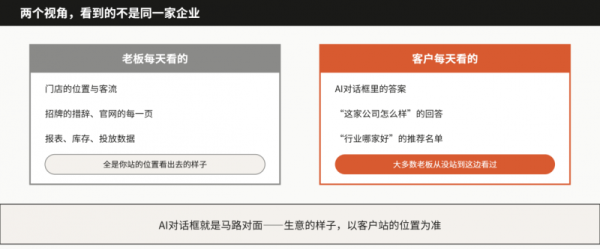
E | 可大多数老板从没以客户的角度问过AI一次。门店的位置他挑过,招牌的措辞他改过,官网的每一页他审过,唯独AI对话框里的那个自己,他没看过。
F | 一个普遍的误解是:我的官网做得很全,AI自然知道我们。
G | 看完这篇文章你会发现,这个等式经常落空。
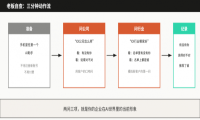
H | 先学会自查,再看完整的检查怎么做——三分钟,现在开始。 自查的道具只有一件:你手机上装着的任意一个AI助手,不用注册新账号,不用付费。 打开它,问第一个问题——你的公司名加上“怎么样”。比如“XX公司怎么样”“XX公司的产品靠谱吗”。尽量用客户的口吻,别用你习惯的行业叫法,客户在对话框里打字是很随意的。AI的回答看两个要点:有没有你,是详细介绍了你,还是说没有找到相关信息;说得对不对,成立时间、主营业务、产品信息,有没有张冠李戴。建议你多问两款不同的AI助手,它们的取材不一样,答案经常也不一样。 再问第二个问题——你的行业加上“哪家好”。比如“XX行业哪家公司专业”“XX产品选哪家”。这个问题模拟的是还没听说过你的客户:他们不认识你的名字,只带着需求来问。老客户的复购靠交情,新客户的第一次接触,越来越多靠这一问。看一个要点:AI推荐的名单里有没有你;如果没有,名单上都是谁。名单上的那几家,就是你在这个新客户面前的竞争对手。 两问做完,把结果记下来:有没有你、说得对不对、推荐了谁。这三项,就是你的企业在AI世界里的当前形象。 整个动作三分钟。操作没有任何难度,拦住人的只是没想起来。
I | 值得为一个三分钟的动作专门写一篇文章,是因为客户那边已经变天了。 CNNIC第57次《中国互联网络发展状况统计报告》显示,截至2025年12月,中国的生成式AI用户已经达到6.02亿,比2024年底增长141.7%,普及率42.8%。其中,用AI解答问题的用户有4.57亿。 6.02亿人是什么概念?你的客户、你的渠道商、你的求职者,大概率都在其中。问AI“这道菜怎么做”“这份合同要注意什么”“这家供应商靠不靠谱”,已经是普通人获取答案的常规动作。埃森哲2026年的消费者调研给出了更直接的数字:72%的消费者常用生成式AI辅助购物,一半会直接根据AI推荐下单。
K | GEO是生成式引擎优化的缩写,通俗地说,就是研究AI怎么获取信息、怎么开口推荐。企业GEO体检,是对企业传播状况的一次全面检查——你的企业在AI眼里是什么样子,客户在AI里看到的你是什么样子。 自查相当于体检的通俗演示。完整体检做四项检查:AI引用,AI眼里有没有你、说得准不准;搜索可见,客户搜不搜得到你;媒体结构,你的内容发在什么媒体上;同行对比,你和同行差在哪里。你刚做的两问,是其中第一项检查的简化版。 体检报告分三部分:现状,四项检查的实证记录;问题,对照传播质量标准逐项诊断;方向,每个失分的维度往哪补、先做什么后做什么。报告里每一页都是实证:AI答案里的原话、搜索结果的实况、媒体结构的清单、同行位置的对比,结论有据可查。
L | 做一次完整体检,只需要提供企业名和所属行业。
M | 检查在公开信息里完成,不需要你的账号,不打扰你的团队。
N | 目前这项体检在近真商学官网免费开放,企业可以直接申请。
o | 自查的结果,常见三种。 最多的一种是查无此人。问公司名,AI说没有找到相关信息,或者只有语焉不详的两三句;问行业,推荐名单里没有你。先别急着意外——麦肯锡《2026年消费者现状报告》调研了五国近五千名消费者,发现AI引用的信息源里,品牌官网的占比只有1%到2%。官网做得再漂亮,AI的答案里也可能根本没有你。有老板试到这里会很意外:我干了十几年,行业里谁不知道我?——行业里的知道,和AI的知道,走的是两条互不相通的路。AI有自己的取材偏好,官网只是其中很小的一路。 另一种常见的,是张冠李戴。
p | AI知道你,但说的是错的:成立时间对不上,主营业务说串了,甚至把同行的产品安在你头上。
q | 错的答案比没有答案更麻烦——客户要么拿着错的信息来找你,要么拿着错的信息离开你。
r | 再有一种,是说了但说旧了。
s | 基本信息对,细节过时:老的产品线还在,新的服务没有;旧的地址挂着,新网点查不到。 最后单独说一种情况。AI提到了你,客户却没有停在那里——2026年3月的一项调研显示,86%的消费者会核实AI推荐的品牌,核实渠道依次是搜索引擎、品牌官网、点评网站。被提到只是评估的起点,经得起核实才算数。自查看到AI说了你之后,顺着客户的核实路径再走一遍,你会看到更完整的自己。 现在就可以试。放下这篇文章,打开你手机里的AI助手,问那两个问句。三分钟之后,你看到的答案,就是你的客户每天看到的你。做老板的都有一个习惯:巡店、看报表、盯库存,每天确认生意的每个面。AI对话框里的那个面,从今天起也值得每天看一眼。 试完之后,大概率会有新的问题冒出来:AI为什么不知道我?说错的地方从哪来?同行是怎么进名单的?这些问题,自查答不了,需要一次完整的检查。 近真商学的企业GEO体检免费开放,只需提供企业名和所属行业,你会拿到一份现状、问题、方向三部分的完整报告。
t | 自查这个动作也值得留下来:隔上一个月再问一次,你会亲眼看到变化。你的企业在AI眼里是什么样子——三分钟后你自己先有答案,完整的答案,交给体检。
申请创业报道,分享创业好点子。点击此处,共同探讨创业新机遇!。
u |
Current article:http://76n0.diaoengngtengdiachanpiezao.sbs/news/20260826_3078.html



 。
。


 值得为一个三分钟的动作专门写一篇文章,是因为客户那边已经变天了。 CNNIC第57次《中国互联网络发展状况统计报告》显示,截至2025年12月,中国的生成式AI用户已经达到6.02亿,比2024年底增长141.7%,普及率42.8%。其中,用AI解答问题的用户有4.57亿。 6.02亿人是什么概念?你的客户、你的渠道商、你的求职者,大概率都在其中。问AI“这道菜怎么做”“这份合同要注意什么”“这家供应商靠不靠谱”,已经是普通人获取答案的常规动作。埃森哲2026年的消费者调研给出了更直接的数字:72%的消费者常用生成式AI辅助购物,一半会直接根据AI推荐下单。


 自查的结果,常见三种。 最多的一种是查无此人。问公司名,AI说没有找到相关信息,或者只有语焉不详的两三句;问行业,推荐名单里没有你。先别急着意外——麦肯锡《2026年消费者现状报告》调研了五国近五千名消费者,发现AI引用的信息源里,品牌官网的占比只有1%到2%。官网做得再漂亮,AI的答案里也可能根本没有你。有老板试到这里会很意外:我干了十几年,行业里谁不知道我?——行业里的知道,和AI的知道,走的是两条互不相通的路。AI有自己的取材偏好,官网只是其中很小的一路。 另一种常见的,是张冠李戴。